

How to read the automotive FPC market
The automotive FPC market covers flexible printed circuits used in vehicle modules such as battery sensing assemblies, cockpit electronics, cameras and lighting. For OEM and Tier 1 buyers, the clearest measure of demand is the number of circuits a defined vehicle program will buy. Start with planned builds, the share of vehicles equipped with each module and the number of flex circuits in each module.
Electrification provides one measurable demand signal. The IEA’s Global EV Outlook 2026 reports that global electric car sales exceeded 20 million in 2025, rising 20% from 2024. The figure measures electric cars sold. It sets context for battery-related assemblies and leaves FPC uptake, production region and content per vehicle to be estimated separately.
Reports on the automotive flexible PCB market can cover different products and supply-chain stages. Before using a headline number in a sourcing presentation, check whether it counts bare flex circuits, rigid-flex boards, populated FPCA, cell-connection assemblies or complete modules. Check vehicle types, base year, geography and whether revenue is measured at the board maker or system supplier. Use estimates with a comparable definition for any trend line.
The automotive market also includes electronics used across several powertrain types. A trim or camera program can share a module across platforms while a battery pack variant uses a different sensing subassembly. Track each design and revision before combining forecasts. The automotive FPC product category shows examples of where those circuit configurations sit in a vehicle.
Where vehicle demand converts into flex circuit orders
An application becomes an addressable opportunity when the OEM or module supplier selects a flexible printed circuit, defines the delivered part and releases an expected build quantity. A high camera installation rate gives a program team a reason to investigate. Its commercial relevance depends on which camera design uses an internal flex and where that interconnect sits in the bill of materials.
Battery-related demand depends on pack architecture. Cell group count, sensing-module layout and a shared or separate supplier for the sensing assembly determine how many FPCs enter the purchase order. Clarify whether your team buys a bare flex circuit, a populated assembly or a module that includes sensing connections and mechanical elements. The existing automotive FPC design guide for BMS and sensors covers the electrical and installed-design decisions behind that scope.
For a cockpit or camera program, ask whether the same electronic module spans vehicles, whether a high-trim variant adds a separate part and who buys the interconnect. A driver display assembly and a rear camera may use similar materials while requiring separate designs, qualified processes and verification. Consolidate volume only after confirming a common circuit revision, production site and acceptance scope.
Cabin lighting and powered seat adjustment can generate additional demand where electronic modules need a compact route. An ambient-light strip may be purchased as a bare LED carrier or as an assembled strip. An adjustment sensor may use a short internal flex with its own connector. Those buy boundaries carry different storage, testing and warranty responsibilities.
- Car ambient lighting LED FPC illustrates a trim-level scope that can include LED placement.
- Backup camera module flex interconnect illustrates an internal module connection with its own mating parts.
Estimate the annual demand for a specific vehicle program
Build your demand model from a dated vehicle production forecast rather than a retail sales total. Use one line per platform, plant, trim or pack configuration when those distinctions affect geometry, fitment or sourcing share. Record the customer forecast owner and update cycle next to each assumption. Apply the awarded supplier share only after calculating the part demand for the full program.
Annual units for a part number = vehicle builds × module fitment × modules per equipped vehicle × FPCs per module. Add service volumes or sample buys on separate lines with separate justifications. Keep replacements and prototype orders outside the production baseline so the quantities can be reconciled to a schedule. For a variant with its own flex outline or connector, give it a separate line until engineering approves interchangeability.
Consider a hypothetical plant assembling 120,000 vehicles per year. Assume a cockpit option is fitted on 60% of those vehicles, each fitted vehicle uses two applicable modules and each module uses one flex. The planning demand is 144,000 circuits before service stock or supplier split. At 45%, 60% and 75% fitment, the range is 108,000 to 180,000 circuits. These are model inputs and calculated units for an example program.
Convert the annual range into monthly call-offs. A steady 12,000 per month and a ramp that peaks at 20,000 with the same annual total can require different material commitments, fixture availability and shift capacity. Tie the peak to the planned launch window and identify the supplier who will carry the buffer. Agree how often the OEM can change the forecast and whether material commitments require a release.
Finally, link the quantity estimate to the approved revision. If the next platform changes the bend envelope, connector or FPC count, add a separate assumption for the overlap period. This makes a second-source decision easier because sourcing can see the actual amount of transferable demand and when it becomes available.
Calculate allocated demand separately from installed demand. In the example, 70% allocation gives the primary supplier a baseline of 100,800 units and leaves 43,200 for the alternate. Keep a separate committed-volume column so a planning split does not become a purchasing promise. If allocation remains open, ask both suppliers to quote low, base and high share scenarios.
When a module is reused on multiple programs, add the schedules after grouping the same released part number. Preserve the source forecast for each customer and plant. Use the highest combined month across the overlapping launch schedules to discuss capacity and material commitments. If plants order independently, confirm which supplier entity invoices each site and how production is scheduled.
Normalize quotes before comparing the piece price
Send the same revision-controlled drawing, expected volumes, installed conditions and acceptance requirements to each bidder. Request a price breakdown with the supply boundary stated plainly. A bare circuit with test evidence and a populated assembly with component purchasing and fixture work solve different purchasing needs. Map the two offers to identical deliverables before comparing their totals.
Put recurring and one-time charges on separate lines. Record the unit price at each volume tier, minimum order quantity, panel or packaging assumptions and any test included with the quoted product. Track tooling, fixtures, first-article work and qualification deliverables as one-time items with their own approval owners. Ask each bidder to disclose the terms for fixture replacement, transfer and storage.
Weigh the commercial exposure as well as the quote. A quote can be attractive at the highest tier and still bind the buyer to a large first release. Ask how the supplier treats pre-purchased connectors, dedicated film and engineering changes before material is committed. Include the estimated cost of scrap, inbound inspection and rework where the purchasing organization has comparable internal data.
Record exclusions as actions. For example, if a bidder quotes the connector without mating thickness verification, assign an owner to confirm how fit will be demonstrated. If the supplier quotes continuity only and the released drawing calls for another electrical test, ask for a priced add-on with reporting and fixture details. A small quote difference can come from a line item that one bidder included by default.
For packaging and documentation, specify whether lot IDs, labels, compliance declarations and individual test records need to travel with every shipment. Quote the same delivered packaging condition and freight basis for all bidders. Finish with a short assumption log so the engineering and commercial teams can resolve the same differences.
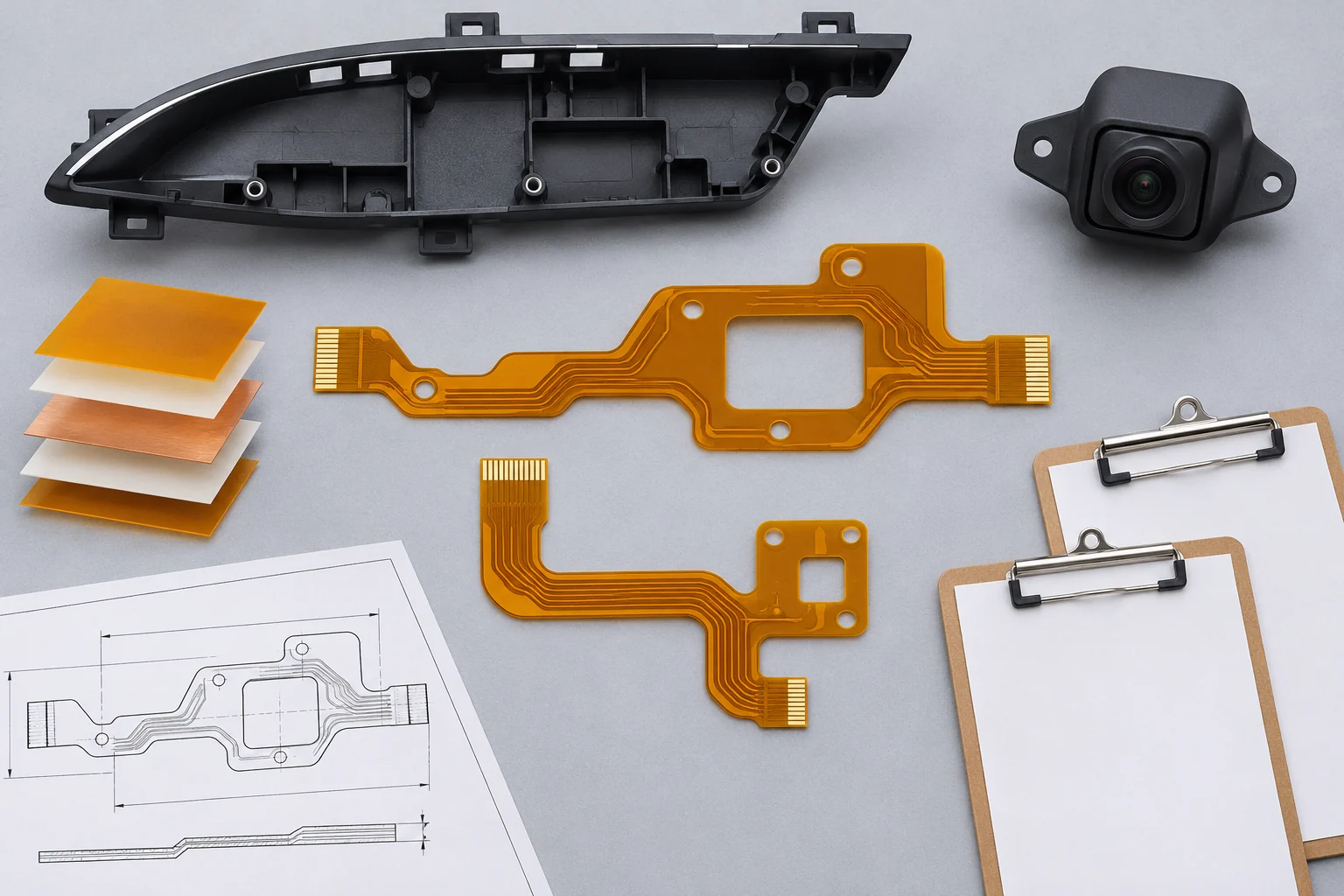
Use the illustrative comparison below as a reminder to line up construction, outline, delivery scope and procurement assumptions beside the sample. Final acceptance belongs to the approved project documents.
For an annual budget, ask for a recurring-cost line per delivered unit and a schedule for fixed charges. Add estimated installation, incoming verification or handling only when those tasks sit within the buyer's responsibility and can be measured consistently. Where competing scenarios have different rework exposure, show both assumptions plainly. This keeps the budget useful when process yields are still unconfirmed.
Record commercial changes in the same file as engineering changes. A different connector plating, reinforcement or panel layout may alter fixture and material costs. Ask the bidder to retain the original tiered quote and identify the incremental effect of the new revision. If the project changes before approval, update the sourcing model using the same landed-cost basis.
Separate process qualification from production readiness
Start the supplier evaluation with a short evidence request. Identify the manufacturing and assembly sites, the proposed flex construction and any subcontracted operations. Ask which process step will constrain the planned launch and how the supplier would protect delivery if a specified laminate, connector or process becomes unavailable. Compare a documented manufacturing route with the delivery plan for your part.
Where the customer requires the Production Part Approval Process, align submission level, evidence, responsibilities and timing early. The AIAG PPAP overview describes PPAP as a supplier-to-customer submission and addresses customer-specific requirements and record retention. State which documentation is included in the quote and who will sign off at each stage. For flexible and rigid-flex printed boards, IPC-6013 is a board qualification and performance specification. Confirm the applicable edition, acceptance requirements and any customer supplements in the procurement documents.
A usable evidence package should connect the purchase order, drawing revision, material lot, production route and test record. Ask for a redacted example that demonstrates how a shipped lot can be traced through fabrication and any agreed assembly. If coupons or sample results are provided, verify their relationship to the construction and installed function under review. Plan a separate finished-module evaluation when the circuit test covers only the board or assembly.
Use the Automotive Flexible PCB Solutions page when matching the proposed application to possible constructions and integration support. Agree the exact manufacturing site, materials, sample criteria and program approval separately in the RFQ and quality agreement.
For ramp readiness, request a capacity view that distinguishes common work from dedicated operations. Confirm how panel preparation, lamination, assembly and electrical test are scheduled for a mixed product line. Ask how the supplier handles an engineering change after fixtures are ordered and how a material substitution reaches the buyer for approval.
Set review gates against the program calendar. Early samples can confirm physical fit and whether the interface functions as intended. A controlled pilot run can check repeatability with the selected materials, fixtures and manufacturing route. Later approval should use the tests and evidence specified by the customer. Document which activity exercises the final production process and what happens if the intended site or material source changes.
Make the change-notification expectations explicit. Ask how alternate materials, line transfers and changes to outsourced operations will be reported, evaluated and approved. Agree who holds the approved drawings, process records and retained samples. For a multi-year platform, those records support future requalification and help buyers estimate the real cost of switching.
Choose a primary and a second source by process risk
Build a second-source plan around the supply risks that could interrupt the program. Two quotations offer limited protection if both proposals depend on the same sole connector, laminate converter or subcontracted test operation. Work through the materials and process flow to find shared dependencies, then determine where a separately qualified alternate adds genuine resilience.
Check transferability before the first order. Can the drawing, fixture design and acceptance program be handed to another approved site? Does the alternate build use the same material output or require a new stack and new verification? State who owns each tool and which items are reusable. Transfer timing should include sample manufacture, supplier qualification, module checks and customer approval where required.
Use a staged allocation. Prototype and pilot demand can be reserved for technical validation and production setup. Assign steady-state share once supplier evidence, lead-time assumptions and launch readiness have been reviewed. Maintain a documented plan for escalations, excess material and revision breaks. Verify that second-source commitments reflect actual allocated volume and buffer expectations.
Procurement can capture the decision in one page. List each supplier, the agreed construction, named site, testing scope, quoted price at the same terms, ability to meet peak call-off and outstanding approvals. Flag the decision dates that could affect start of production. For integrated projects that include a design review, prototype and later assembly handoff, discuss the responsibilities with Teleconix OEM / ODM engineering services.
Use supporting evidence to rank the offers. A supplier can be ready for engineering samples with long-lead tooling still open. Another may have an agreed process at one factory and quote volume from a different location. Keep the unresolved actions visible and agree who will close each one. Revisit the allocation when the customer approves the specific part and manufacturing route.
Plan for the end of the contract as well as launch. Ask about final order commitments, service quantities and how the supplier will handle the retirement of dedicated materials or fixtures. A supportable exit plan reduces disruption when a program is redesigned or moved. Record the acceptable substitutions and continuity responsibilities while both parties still have access to the engineering documents.
Questions buyers ask about the automotive FPC market
Can I estimate FPC demand from electric car sales?
Use electric car sales as broad market context. For a part forecast, use planned builds for a platform, the configuration fitment rate and the number of relevant circuits per module. Add a supplier allocation once the customer has defined it.
What changes the scope of an automotive FPC market estimate?
The largest differences come from what is counted and at which point in the supply chain. Separate bare flex, rigid-flex, FPCA and finished modules. Confirm the vehicle scope, region, price basis and date before combining estimates.
Which assumptions should be identical in an RFQ comparison?
Use the same revision, construction and annual volume tiers, plus the same package scope, production site assumptions and acceptance evidence. Price any differences, including components, tooling, fixtures or qualification services, on their own lines.
When should I compare an alternative supplier?
Start before locking the fixture and qualification plan. Compare the proposed construction and site, check common material dependencies and establish a realistic transfer and sample approval schedule. A controlled specification helps the second supplier quote the same deliverable.
From market research to an actionable RFQ
A practical market assessment ends with a sourcing decision that engineering and purchasing can explain. Start with the applicable final assembly and the part numbers that enter its bill of materials. Estimate the scheduled build across variants, define the supplied circuit or subassembly and give each bidder the same launch and quality requirements. Check evidence and capacity at the proposed sites before allocating the program.
Bring the mechanical model, electrical interface and proposed order quantities to the first discussion. List customer-specific approval documents, target sample dates and the tests assigned to the supplier. Mark any requirement you still need the module team to confirm, along with its owner. To review your requirements, contact Teleconix about your automotive FPC project.